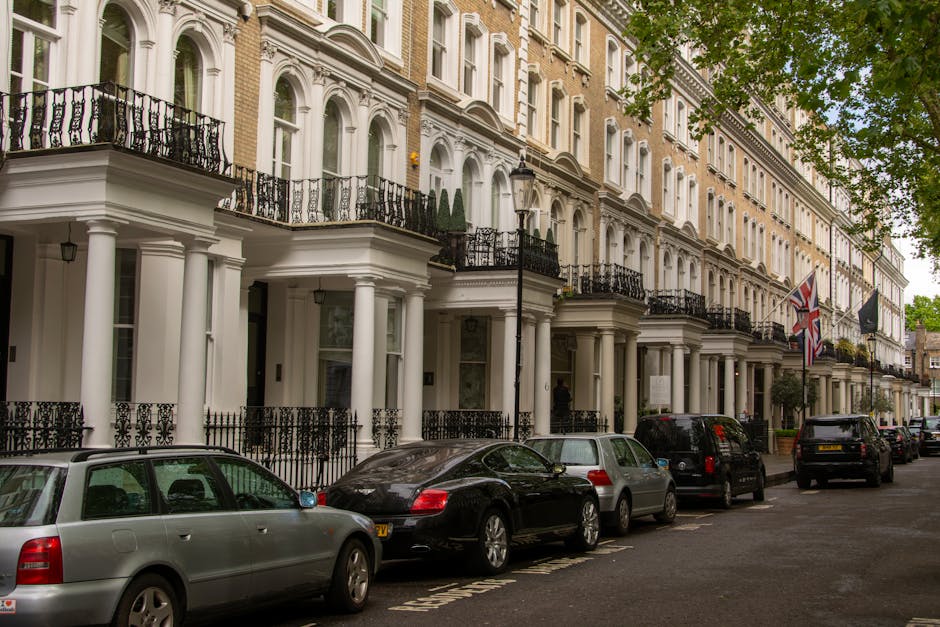
Kensington and Chelsea removals permits and fines Knightsbridge: a practical guide for safer, smoother moving day
Moving in Knightsbridge can look simple from the pavement, but the reality is often less forgiving. Tight streets, controlled parking, busy kerbs, mansion block access, loading restrictions, and the risk of penalties all pile up fast. If you are trying to understand Kensington and Chelsea removals permits and fines Knightsbridge, the key question is not just whether you need permission. It is how to avoid a move turning into a stressful, expensive mess. That is what this guide is here to do: explain the permit side, the fine risks, the practical workflow, and the simple checks that save time on the day.
Truth be told, most moving problems in central London start before the van even arrives. A parking bay that seemed fine, a suspension you missed, a narrow street with no turning room, or a loading spot that is taken by 8:15 a.m. - and suddenly you are dealing with delays and avoidable charges. Let's make it clearer, step by step.
Why Kensington and Chelsea removals permits and fines Knightsbridge matters
In Knightsbridge, parking and loading are not side issues. They are often the difference between a move that runs to plan and one that drags on for hours. A removal van waiting in the wrong place can be issued a fine, moved on, or forced to circle while the crew carries boxes by hand. That may sound minor until you are standing on the pavement with furniture, a clock ticking, and a building manager getting visibly impatient.
The borough around Knightsbridge is especially sensitive because space is limited and traffic pressure is constant. Even a short stop can become awkward if the location sits on a red route, near a suspended bay, or inside a managed parking zone. You also have to think about residents, concierge rules, timed access slots, and the need to keep pavements clear. A good moving plan is really an access plan.
Fines matter because they do not stay theoretical for long. A small oversight can lead to enforcement action, and once that happens, the hidden cost is usually not just the penalty itself. It is the delay, the extra labour time, the stress, and occasionally the need to book a second vehicle or additional helpers. That is why people searching for Kensington and Chelsea removals permits and fines Knightsbridge are usually looking for more than legal information. They want a move that actually works in the real world.
Practical takeaway: In central London, the cheapest move is rarely the one with the lowest quote on paper. It is the one that avoids delays, parking mistakes, and enforcement headaches.
How Kensington and Chelsea removals permits and fines Knightsbridge works
Removal access in Knightsbridge usually comes down to three things: where the vehicle can stop, how long it can stay there, and whether the move needs advance permission or parking controls. The exact rules vary by street, bay type, and time of day, so the safest approach is to treat every address as a separate access case. That might sound a bit fussy, but in London, fussy is often sensible.
Most removals fall into one of these broad situations:
- Legal loading is possible without special arrangements but only for a short period and only if the bay or kerbside space is available.
- Parking restrictions apply and the vehicle needs to stop in a compliant way, which may mean checking time windows carefully.
- A permit, dispensation, or formal parking arrangement is needed because the move is likely to block a bay, use a controlled space, or require longer loading time than usual.
What catches people out is assuming that a normal parking space is enough. It may not be. Some roads allow loading only at certain times, some bay types are resident-only, and some streets are simply too tight for a large van to wait around without causing issues. If you are using a service like man and van removals or a larger vehicle, the access needs can be very different.
Fines usually happen because one of these points was missed:
- the van parked in a restricted bay
- loading went over the permitted time
- warning signs were not checked properly
- a suspension or temporary restriction was in place
- the driver stopped in a way that obstructed traffic or pedestrians
There is also a practical layer here. Even if a fine is avoidable, a poor setup can still slow the move enough to add labour costs. A crew waiting around while you sort out access is not ideal - nobody enjoys that awkward half-hour where everyone is carrying a wardrobe and looking at the road like it owes them money.
Key benefits and practical advantages
Handled properly, permit planning does more than reduce the chance of fines. It improves the whole move from start to finish. That is especially true in Knightsbridge, where access can be the most fragile part of the day.
1. Fewer delays
When parking and loading are planned in advance, the van arrives knowing where it can stop. That reduces waiting time, circling, and last-minute reshuffling. In a busy area, those minutes add up quickly.
2. Lower risk of penalties
Careful checking helps you avoid parking contraventions, missed loading windows, or accidental obstruction. It is rarely one single huge mistake. More often, it is a series of small assumptions. Avoid those and you avoid a lot of pain.
3. Better cost control
Penalty charges, extra labour time, and repeat journeys can all inflate the final bill. A clean access plan keeps the move more predictable, which is what most people really want. Predictable is underrated.
4. Safer handling of heavy items
If the vehicle can park close enough to the property, movers can transport items with fewer long carries. That matters for stairs, antiques, wardrobes, office equipment, and awkward furniture. The shorter the carry, the lower the risk of bumps and damage.
5. Less friction with neighbours and building staff
In Knightsbridge, you may be dealing with concierge teams, building managers, residents, or trade access rules. A tidy, well-timed operation is simply easier for everyone. And that matters more than people expect.
If you are comparing moving options, it can help to look at a company's wider support, such as removal services, house removals, or even office removals if you are moving a workspace rather than a flat. Access planning should sit inside the service, not as an afterthought.
Who this is for and when it makes sense
This topic matters to anyone moving in or around Knightsbridge, but some people need to pay closer attention than others.
- Flat and apartment movers dealing with mansion blocks, shared entrances, or restricted bays.
- House movers relocating from streets with limited waiting space or narrow carriageways.
- Businesses needing timed loading for office moves or furniture drops.
- Landlords and letting agents coordinating tenant handovers, inventory days, or urgent clear-outs.
- People using a man and van for a small but time-sensitive move where every minute matters.
It makes sense to think about permits and fines whenever the vehicle cannot simply pull up, unload, and leave without affecting traffic or breaking a restriction. Even a modest move can need proper planning if the street is busy or the building has strict access rules.
One small but useful point: if you are only shifting a few items, do not assume the rules are automatically simpler. A small load can still land you in trouble if the van stops in the wrong place. Tiny move, same restrictions. Annoying, but there it is.
Step-by-step guidance
Here is the practical sequence I would use for a Knightsbridge move. Keep it simple, and do not skip the boring checks. The boring checks are the ones that save you.
- Confirm the exact address and access point.
Check which entrance the movers will use, whether it is a front door, side gate, mews entrance, loading dock, or building service entrance. - Inspect street restrictions in detail.
Look at bay markings, loading signs, time limits, suspension notices, and any nearby red line or controlled parking issues. - Assess vehicle size and loading time.
A small van, a medium removals van, and a larger moving truck do not face the same constraints. If you are booking a moving van or moving truck, the road space matters even more. - Plan for realistic loading duration.
Think about stairs, lifts, distance from van to property, and whether the move includes dismantling or packing help. - Decide whether a permit or other arrangement is needed.
If the stop is likely to occupy a restricted bay or cause a longer obstruction, sort this out before moving day, not after. - Brief everyone involved.
Tell the movers, the building manager, and if needed the neighbours about arrival time and vehicle setup. - Build in a buffer.
Give yourself extra time for traffic, lift delays, and the inevitable moment when someone cannot find a key. It happens. - Keep evidence and contact details handy.
Have your booking details, property access notes, and any permit confirmation ready to show if needed.
A realistic move plan always includes a fallback. If the ideal bay is occupied, where will the van go instead? If a lift is out, what is the carrying route? If the street is too busy, can the team load from a nearby compliant spot? These questions are not dramatic. They are just useful.
Expert tips for better results
The best removals in Knightsbridge tend to have one thing in common: they are planned like a logistics problem, not just a moving job. That sounds dry, but it works.
- Choose a smaller vehicle if the access is tight. Sometimes a well-packed removal van is far more practical than a larger truck.
- Schedule the move for a quieter time where possible. Mid-morning can be easier than school-run or peak commuter periods, though local conditions vary.
- Use clear labelling. When the access window is short, boxes that are labelled by room save real time.
- Measure bulky items in advance. Hallways in older buildings can be deceptively awkward. A sofa that looked fine online may be an absolute monster in real life.
- Protect loading zones from confusion. If a building manager has given you instructions, write them down. Sounds obvious. It still gets missed.
- Ask about insurance and safety cover. You want a mover that takes risk seriously, not one that treats it like an afterthought. The company's insurance and safety information should be clear and easy to understand.
A slightly unusual tip, but useful: walk the route from the street to the front door while imagining you are carrying the heaviest item. If you find a pinch point, a step, or a turn that feels awkward, the movers will too. Better to notice it in daylight than at 4:30 p.m. with the kettle still unpacked.
Common mistakes to avoid
Most parking and permit problems in removals are preventable. These are the mistakes that crop up again and again.
- Assuming one street behaves like the next. In Knightsbridge, nearby roads can have very different rules.
- Forgetting temporary restrictions. Suspensions, utility works, and event-related controls can change a normal bay into a no-go zone.
- Booking the wrong vehicle size. Too large, and you may struggle to stop. Too small, and you may need extra trips.
- Ignoring building rules. Some properties require proof of access, booked lift times, or a specific arrival slot.
- Leaving parking decisions to the last minute. By the time the van arrives, your options are often much worse.
- Not planning for overrun. If the move runs long, the risk of a fine goes up. Simple as that.
The biggest mistake is probably this: treating the move as if a vehicle can just "find somewhere nearby." That may work on the edge of town. In Knightsbridge, not so much. The nearby spot is often the expensive spot.
Tools, resources and recommendations
You do not need a complicated toolkit to manage this well. What you need is a practical system.
- A written access note with the exact address, entrance details, timing, and any building instructions.
- Photographs of the street and frontage so you can discuss loading space clearly before the van arrives.
- A floor plan or room list for larger house moves and office relocations.
- A checked inventory for fragile or high-value items.
- A contact number for the building manager or concierge in case access needs to be clarified on the day.
If you are comparing service levels, the company's wider information can be a good signal. Pages like pricing and quotes, terms and conditions, and health and safety policy help you understand how the business works, how risks are handled, and what to expect before booking. That kind of clarity is worth a lot on a busy move day.
For home relocations, you may also find it useful to review broader services such as home moves, house movers, or packing and unpacking services if you want a more hands-off experience.
Law, compliance, standards, or best practice
For removals in Kensington and Chelsea, the safest approach is to respect local parking controls, traffic signs, and any temporary suspension or loading restrictions. It is also sensible to follow normal UK road and workplace safety expectations: do not obstruct pedestrians, do not unload unsafely, and do not assume that short-term stopping is automatically allowed.
Where the move involves a building, the landlord, managing agent, or concierge may impose additional access rules. These are not always legal rules in the strict sense, but they still matter because they affect access, timing, and safety. If the building says a loading bay must be pre-booked, for example, you should treat that as mandatory for the move.
Best practice usually means:
- confirming access well in advance
- keeping loading clear and efficient
- avoiding overlong vehicle stops
- using a suitably sized vehicle
- keeping communication open between all parties
If you are moving business stock or office furniture, compliance matters even more because delays may affect staff, customers, or business continuity. In that case, a structured approach through commercial moves or dedicated office relocation services may be the cleaner route.
Options, methods, or comparison table
Different moves need different access strategies. Here is a straightforward comparison to help you think through the options.
| Approach | Best for | Main advantage | Main risk |
|---|---|---|---|
| Small van / man and van | Light to medium loads, tight streets, quick jobs | More flexible parking and easier manoeuvring | May require extra trips if under-sized |
| Standard removal van | Typical flat or house moves | Balanced capacity and access | Still needs careful loading planning in restricted streets |
| Larger moving truck | Bulkier house or commercial moves | Greater capacity, fewer trips | Harder to position in Knightsbridge streets |
| Professional full-service removals | Complex moves, valuable items, multi-room properties | Better planning, packing support, stronger coordination | Needs more lead time and clearer access details |
In practice, the best option is often the one that matches the street, not just the load. A smaller vehicle can beat a bigger one if parking is awkward. That is one of those obvious things people only realise after the fact. Frustrating, yes. Useful, also yes.
Case study or real-world example
Imagine a couple moving from a Knightsbridge apartment into a nearby townhouse. The inventory is modest: a sofa, a bed, several boxes, and a dining table. On paper, it looks like a straightforward morning job. But the building has a narrow frontage, the street is already busy, and the closest stopping point is controlled.
Instead of arriving cold and hoping for the best, the movers check the access route in advance, confirm the entrance details, and choose a vehicle that can stop more easily. The client labels the boxes by room and keeps the lift booked for the first hour. When the van arrives, everything moves quickly. The load is carried in one clean sequence, there is no awkward waiting, and the crew finishes on schedule.
Now picture the same move without that prep. The van circles the block, the lift booking is wrong, one box has gone missing in the flat, and the crew is carrying a wardrobe through a cramped entrance while a driver worries about overstaying in the bay. Same move, very different day.
That is why permit and fine awareness is not a technicality. It is part of the moving experience itself.
Practical checklist
Use this before moving day. It is simple, but it covers the essentials.
- Confirm the exact property address and entrance.
- Check nearby parking, loading, and stopping restrictions.
- Ask whether a permit, dispensation, or bay arrangement is needed.
- Choose a vehicle size that suits the street and the load.
- Book any building lift or concierge access window.
- Label boxes and fragile items clearly.
- Measure bulky furniture against doorways and corridors.
- Share access notes with the mover in writing.
- Keep contact numbers for the property manager and the moving team.
- Allow extra time for delays, traffic, or access hiccups.
Get a free quote today and see how much you can save.
Conclusion
Knightsbridge moves are rarely difficult because of the packing alone. They are difficult because of the logistics around the packing: access, stopping space, building rules, and the risk of fines if things go off-plan. Once you understand the moving environment, the whole job becomes more manageable.
The big lesson is straightforward. Treat parking and permit planning as part of the move, not as a side admin task. That mindset saves money, reduces stress, and makes the day flow more smoothly. And if you are juggling a house move, office relocation, or just a stubbornly awkward sofa, a bit of preparation goes a long way. A proper way, actually.
If you are ready to move with fewer surprises, keep the access plan simple, keep communication clear, and give yourself breathing room. That usually does the trick.
Frequently Asked Questions
Do I need a permit for removals in Knightsbridge?
Sometimes, but not always. It depends on the street, the bay type, the time of day, and how long the van needs to stop. The safest approach is to check the exact access conditions for the property rather than assuming nearby parking will be fine.
What happens if a removal van gets a fine?
The penalty can add extra cost and cause delays. In many cases, the bigger issue is not the fine itself but the disruption it creates. The move may take longer, labour time can increase, and the whole schedule may slip.
Can a man and van service handle tight Knightsbridge streets?
Often, yes. A smaller vehicle is sometimes the smartest choice in a restricted area. That said, the load size still matters, so it is worth balancing vehicle flexibility with the amount you need to move.
How early should I plan parking for a move?
As early as possible. For central London moves, parking and access details should be checked before the booking is finalised if you can manage it. Leaving it until the day is where problems start.
Are loading bays always available for removals?
No. Some bays are controlled, some are resident-only, and some have time limits. Temporary suspensions or works can also change what is available. A bay that looks perfect can be unusable by the time the van arrives.
Is a larger moving truck better than a smaller van?
Not automatically. A larger truck may reduce trips, but it can be harder to position in Knightsbridge. A smaller van may be more practical if access is tight or stopping space is limited.
What should I tell my movers before the day?
Give them the exact address, entrance details, parking restrictions, building access rules, lift bookings, and any timing constraints. The more specific you are, the fewer surprises there will be.
Can office moves in Knightsbridge follow the same approach?
The basic logic is the same, but office moves usually need even tighter timing and more coordination. If stock, equipment, or staff access is involved, a proper commercial plan is best.
Do building managers usually have rules for removals?
Yes, many do. They may require booking windows, protective measures, or specific access routes. These rules are not optional just because the street looks quiet. They can still control the move.
How do I reduce the risk of parking fines on moving day?
Check restrictions carefully, use the right vehicle size, confirm building access, allow extra time, and avoid stopping in a bay or area unless you are sure it is permitted. A little prep goes a long way here.
What if my move takes longer than expected?
Build a buffer into the schedule from the start. In central London, delays happen for ordinary reasons: traffic, lift issues, access checks, or simply a heavier load than expected. Planning for a bit of slippage is sensible, not pessimistic.
Where should I start if I want help with a Knightsbridge move?
Start by looking at the vehicle type, the access conditions, and the support you need. Pages such as removals and removals near me can help frame your next step if you are comparing service options and want a clearer picture of what fits your move.