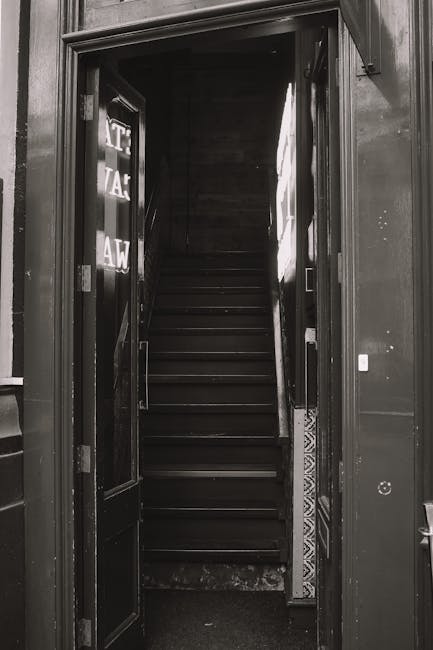
Narrow staircase removals challenges and fixes Knightsbridge

If you have ever stood at the bottom of a tight stairwell and wondered how on earth a sofa, wardrobe, or piano is meant to get through, you already understand the problem. Narrow staircase removals challenges and fixes Knightsbridge is not just a niche moving issue; in Knightsbridge, it is often the difference between a smooth move and a stressful day full of scraping walls, awkward lifts, and last-minute problem solving.
Older conversions, elegant period buildings, basement flats, split-level layouts, and staircases designed for people rather than furniture all create a real moving challenge. The good news? With the right planning, the right packing, and the right removal approach, most of the headache can be reduced. This guide walks through what makes narrow stair removals tricky, what fixes actually work, and how to plan a safer, calmer move in Knightsbridge without making a costly mess of it.
Table of Contents
- Why Narrow Staircase Removals Challenges and Fixes Knightsbridge Matters
- How Narrow Staircase Removals Challenges and Fixes Knightsbridge Works
- Key Benefits and Practical Advantages
- Who This Is For and When It Makes Sense
- Step-by-Step Guidance
- Expert Tips for Better Results
- Common Mistakes to Avoid
- Tools, Resources and Recommendations
- Law, Compliance, Standards, or Best Practice
- Options, Methods, or Comparison Table
- Case Study or Real-World Example
- Practical Checklist
- Conclusion
- Frequently Asked Questions
Why Narrow Staircase Removals Challenges and Fixes Knightsbridge Matters
Knightsbridge has a particular moving profile. You often see high-value homes, compact apartments, grand terraces, and buildings where the staircase looks beautiful but behaves like a puzzle. That matters because the staircase is usually the bottleneck in the whole move. If the stairs are too tight, too steep, or awkwardly turned, the move is no longer just about carrying boxes. It becomes about risk, precision, and protecting both the property and the items being moved.
Let's face it: one careless turn can leave a dent in a painted wall, a chip in a banister, or a cracked item of furniture. And in a place like Knightsbridge, where access can already be limited by parking, neighbours, concierge rules, or narrow entrances, the staircase can be the part that decides everything. That is why this topic matters so much for anyone planning a home move, flat clearance, or even a single-item furniture removal.
The issue is not only physical space. Timing matters too. If you are working to a move-out deadline, a rental handover, or a same-day schedule, a narrow staircase can turn a straightforward job into one that needs a second plan. That is exactly where thoughtful fixes come in: measuring properly, breaking down furniture where possible, protecting surfaces, and sometimes using a different route or a different moving method altogether.
For a wider moving plan, people often combine staircase planning with services such as flat removals, house removals, or even man and van support when only a smaller team is needed. In practice, the staircase issue rarely sits alone.
How Narrow Staircase Removals Challenges and Fixes Knightsbridge Works
The process starts before anyone lifts a box. A careful mover will look at the staircase itself, the item sizes, the turns, the landings, the head height, and the point where the stairwell narrows. If there is a bannister, a light fixture, a radiator, or a low ceiling, those details can change the whole plan. It sounds obvious, but the devil really is in the details here.
In a narrow stair removal, the mover usually works through a sequence: assess, measure, protect, plan the route, then move item by item. The fix is rarely brute force. In fact, brute force is usually the thing that causes the problem. Good removals work because they are methodical, not heroic. A wardrobe that seems impossible from the front may go perfectly well once it is tilted, dismantled, or carried in a different orientation.
There are a few common techniques. First, disassembly. Beds, tables, shelving, and modular storage often move more safely in pieces. Second, protection. Stair runners, corner guards, doorframe covers, and floor protection reduce damage. Third, load planning. The heaviest or most awkward pieces are moved when the team is fresh and the route is clear. Fourth, communication. One person leads, one spots the corners, and one watches the landing. A quiet stairwell can suddenly feel busy and loud, especially when everyone is concentrating.
In some cases, the answer is not to force items upstairs or downstairs at all. Storage, temporary holding, or a different vehicle setup may be smarter. If you need to keep things safe while sorting access, storage can be a practical bridge rather than a panic move.
Key Benefits and Practical Advantages
Solving narrow staircase issues properly does more than avoid damage. It makes the whole move feel controlled. That may sound a little soft, but it is not. A controlled move tends to finish faster, with less stress and fewer surprises. And once you are carrying something awkward on a tight stairwell, surprises are not welcome.
- Reduced property damage: walls, bannisters, paintwork, and flooring are less likely to suffer scrapes or chips.
- Lower item risk: bulky furniture and fragile items are less likely to twist, drop, or catch on corners.
- Better timing: a properly planned move avoids the slow, stop-start pattern that usually comes from guesswork.
- Less physical strain: correct lifting and spacing protect movers and residents alike.
- Improved confidence: when you know the route is possible, the entire day feels easier.
There is also a financial angle. Damage caused by poor handling can be awkward and expensive, even if the item itself survives. Preventing that outcome is usually cheaper than fixing it after the fact. To be fair, that alone is a pretty strong reason to plan properly.
People moving in Knightsbridge often have valuable furniture, bespoke pieces, antique items, or fitted wardrobes that do not forgive poor handling. For those situations, specialist support such as furniture removals or piano removals may be worth considering rather than treating the staircase as an afterthought.
Who This Is For and When It Makes Sense
This kind of planning is useful for far more people than first-time movers. It makes sense whenever access is tight, the staircase is awkward, or the items are too precious to risk. That includes residents in mansion blocks, top-floor flat tenants, landlords clearing furniture, and families moving a full household from a building with tight internal access.
It also matters for student moves, smaller same-day jobs, and office relocations in mixed-use buildings. A staircase can become a bigger problem than the loading bay, especially if the lift is unavailable or too small for the item. If your move has a deadline and limited access, it is wise to think about this early, not after the van has arrived and everyone is standing around with that same look on their face.
Typical situations include:
- a sofa that will not take the turn on the landing
- a bed frame that needs dismantling before it can be carried safely
- a fridge or washing machine that is too wide for the stairwell
- a piano, sideboard, or wardrobe that needs specialist handling
- a basement or top-floor flat with tight, winding access
If the move is part of a larger home relocation, it often helps to pair the access plan with home moves support or a tailored removal services package, rather than treating each part as separate. That way, packing, timing, and access can all be coordinated.
Step-by-Step Guidance
Here is the practical version. Not glamorous, but it works.
- Measure the staircase and the items. Measure height, width, landing space, and the widest points of the furniture. Do not eyeball it. People do, and then they regret it.
- Check turns and obstructions. Look for sharp corners, handrails, lighting, radiators, mirrors, and anything else that could snag or scratch.
- Decide what can be dismantled. Beds, tables, desks, and some wardrobes should be partially stripped down before moving day.
- Protect the route. Cover floors, wrap corners, and shield wall edges before anything starts moving.
- Assign roles. One person leads, one supports the lower end, and one watches clearances at the corners.
- Move the largest items first. Do the awkward pieces while energy and concentration are still high.
- Use the right vehicle and loading plan. Make sure the van or truck is positioned sensibly so the team is not wasting effort before the lift even begins.
- Pause when needed. If the item is catching or twisting, stop and rethink. A short reset saves more than a forced push.
A real-world example: a wardrobe may look impossible on paper, but once the doors are removed and the base is lifted at an angle, it can often pass through a tight stairwell with surprisingly little drama. The key is not luck. It is preparation, honestly.
Expert Tips for Better Results
In practice, the best narrow staircase moves are built on small decisions made early. The details matter more than most people expect. Here are the sorts of things that make a genuine difference.
- Photograph the staircase in daylight. It helps identify tight spots and awkward shadows that are easy to miss in person.
- Clear the stairwell completely. Even a small stack of shoes or a bin bag can become a trip hazard when hands are full.
- Use blankets and wraps generously. A little extra padding is usually cheaper than repainting a hallway.
- Keep doors open where safe. It reduces pinch points and makes movement smoother.
- Label dismantled parts clearly. Screws, brackets, and fittings disappear at the worst possible moment. They really do.
- Schedule difficult moves for quieter times. In shared buildings, fewer people in the hall makes the process easier and safer.
Another useful habit is to think in layers. First the building, then the route, then the item, then the weather, then the schedule. That order sounds fussy, but it keeps you grounded. A wet entrance, a muddy path, or a busy front step can turn a manageable move into a bit of a faff.
If you need a wider support setup, it can help to combine staircase planning with packing and boxes or packing and unpacking services. Well-packed items are easier to stack, carry, and protect on narrow stairs.
Common Mistakes to Avoid
The most common mistake is assuming the staircase will be fine because "it looked okay on the viewing". That is a classic one. A staircase can feel roomy when you are walking up it empty-handed and then become tiny the moment you try to turn a mattress or a washing machine on the landing.
Other mistakes crop up again and again:
- Not measuring the tallest or widest point. Diagonal width can matter more than straight width.
- Leaving the route unprotected. Bare walls and corners are vulnerable.
- Forcing oversized items through. If it does not fit, it does not fit. Forcing it rarely ends well.
- Ignoring building rules. Shared entrances, concierge access, and moving windows can all affect your timing.
- Underestimating fatigue. Stair moves are tiring. A team that starts strong can still lose control if the job drags on too long.
There is also a communication mistake that gets overlooked. People often assume everyone can see the same obstacle from the same angle. They cannot. One person might see the top edge catching the wall while another is focused on the step below. Say it out loud. Slow down. Repeat if needed. A little over-communication on stairs is a good thing, not a nuisance.
Tools, Resources and Recommendations
You do not need a warehouse of equipment, but the right moving tools make a real difference. For narrow stairs, the essentials are usually straightforward. Protective covers, furniture blankets, tape, straps, gloves with grip, dollies where appropriate, and dismantling tools for furniture that can safely be taken apart.
In a smaller home or flat move, a compact vehicle can be more practical than a larger one, especially when parking is limited outside Knightsbridge properties. In other situations, a more substantial vehicle may be better for grouping loads efficiently. That is one reason people compare removal van options with moving truck capacity before they book.
Useful recommendations include:
- have a tape measure ready before the survey or pre-move check
- keep spare blankets and stretch wrap for unexpected shapes
- use proper lifting gloves rather than bare hands on heavy edges
- pack smaller items into sensible load sizes rather than random heavy boxes
- consider temporary holding if the staircase route is unsafe on the day
When the move is urgent, a service such as same-day removals can help, but only if the access plan is still realistic. Speed is useful; chaos is not.
Law, Compliance, Standards, or Best Practice
There is no single law that specifically solves narrow staircase removals, but there are clear duties around safety, reasonable care, and preventing avoidable harm. In normal UK practice, a professional mover should work with appropriate lifting methods, sensible risk awareness, and care for the property being used. That includes protecting floors, checking access, and not overloading people with jobs that are obviously unsafe.
In shared buildings, it is also sensible to respect building rules, tenancy obligations, concierge procedures, and any agreed move-in or move-out windows. Those may not be glamorous topics, but they can make or break a smooth day. It is also wise to check any insurance terms that matter to your move, especially if the items are valuable or the staircase is particularly tight. If something can be protected in advance, it should be.
A practical best-practice approach usually includes:
- advance access checks
- clear communication with the building or landlord
- careful handling of heavy or fragile items
- route protection to reduce surface damage
- recording pre-existing marks where helpful
For people who want reassurance around safety and handling standards, it can be useful to review pages such as health and safety policy and insurance and safety before booking. That sort of due diligence is plain common sense, really.
Options, Methods, or Comparison Table
Not every narrow staircase problem needs the same fix. Some jobs are solved by dismantling, others by changing the route, and some by using a different moving setup altogether. Here is a simple comparison to help you think it through.
| Method | Best for | Pros | Limitations |
|---|---|---|---|
| Dismantling furniture | Beds, tables, wardrobes, shelving | Often the safest and most controllable option | Needs time, tools, and careful labelling |
| Full route protection | Most stairwell moves | Reduces damage risk to property | Does not solve a size issue on its own |
| Smaller vehicle and repeated loads | Compact flats and limited access | Easier parking and less congestion | Can take longer if the volume is large |
| Storage or staged move | Tight schedules or blocked access | Buys time and reduces pressure | Requires extra planning and coordination |
| Specialist handling | Pianos, antiques, oversized items | Higher confidence for delicate or awkward items | May cost more than a standard move |
If you are not sure which method fits, start with the staircase itself and work backwards. That sounds simple because it is. Once the route is clear, the rest often falls into place.
Case Study or Real-World Example
Picture a Knightsbridge flat move in a converted building with a narrow, turning staircase and a heavy sofa that needs to go down to street level. On paper, it looks awkward but manageable. In reality, the landing is tighter than expected, and the sofa catches slightly at the turn. Nothing dramatic, just enough to make everyone pause.
The fix is not panic. The team removes the sofa feet, checks the route, adds more blanket protection to the bannister edge, and changes the carry angle so one end is raised slightly higher than the other. The sofa then passes the turn with a little more space to spare. Not easy, but clean and controlled. Nobody is trying to win an award for speed. They just want the sofa down safely, and the wall unscuffed.
That sort of move is a good reminder that a narrow staircase challenge rarely means "impossible". More often it means "needs a better method". There is a difference, and a useful one at that.
For mixed home and small-business moves in the same area, a service structure that includes office removals or commercial moves may also be relevant if goods need to travel through the same constrained access points.
Practical Checklist
Use this before move day. It saves hassle, and a bit of sanity too.
- Measure the staircase, landings, and widest furniture points
- Check for banisters, lights, radiators, and other obstructions
- Decide which items should be dismantled in advance
- Protect floors, walls, and corners before carrying begins
- Confirm who will lead, spot, and support each load
- Clear the stairwell and entrance of loose items
- Check access times, parking, and building rules
- Prepare gloves, tape, wraps, tools, and blankets
- Plan an alternative if a large item does not fit
- Keep a backup option ready, including storage if needed
If you are moving from a higher-floor flat, a student property, or somewhere with very limited space, this checklist becomes even more useful. And yes, it is a bit boring. But boring is good when the alternative is a broken sideboard.
Get a free quote today and see how much you can save.
Conclusion
Narrow staircases are one of the most common moving headaches in Knightsbridge, but they are also one of the most manageable when you treat them properly. Measure carefully, protect the route, dismantle what you can, and do not force large items through a space that clearly does not want them. Simple advice, perhaps, but it works.
The real fix is not muscle alone. It is planning, patience, and using the right removal method for the property in front of you. Whether you are handling a flat move, a full house relocation, or a single awkward item, the best results come from staying calm and thinking ahead. That way, the staircase becomes a challenge to solve rather than a problem to fear.
And if you are looking at your own stairs right now and feeling slightly daunted, that is perfectly normal. Most people do. The trick is to take it one careful step at a time.
Frequently Asked Questions
What makes narrow staircase removals so difficult in Knightsbridge?
Many Knightsbridge properties have compact or period staircases, tight turns, and limited landing space. The challenge is usually less about distance and more about angles, clearance, and protecting the building while moving items safely.
Can a sofa really fit up or down a very narrow staircase?
Sometimes yes, sometimes no. It depends on the sofa's dimensions, whether it can be partially dismantled, and how much turning space exists on the landing. Measuring both the furniture and the stairwell is the sensible first step.
Should I dismantle furniture before a staircase move?
If the item can be safely dismantled, usually yes. Beds, tables, shelving, and some wardrobes often move more easily in pieces. Just keep fittings organised and label parts clearly so reassembly is not a headache later.
What is the best way to protect walls and bannisters?
Use blankets, padding, corner protection, and floor coverings before the move starts. It is much easier to prevent scuffs than to patch paintwork afterwards. A little protection goes a long way.
Do I need a specialist mover for a narrow staircase?
Not always, but specialist help is worth considering if the item is bulky, fragile, valuable, or unusually awkward. Pianos, large wardrobes, and antique furniture often justify a more careful approach.
What happens if the item does not fit on the stairs?
A good mover will stop, reassess, and look for alternatives such as dismantling the item, changing the carry angle, using another route, or arranging storage. Forcing it is rarely the right answer.
How do I know if my property needs storage during the move?
If access is blocked, timing is tight, or some items cannot be moved safely on the day, temporary storage can help. It gives you breathing room and avoids rushed decisions under pressure.
Are same-day removals suitable for narrow staircases?
They can be, but only if the access plan is realistic. Same-day work is useful when time is short, though it still needs careful measurements and the right preparation. Speed alone does not solve a staircase problem.
What kind of vehicle is best for a tight Knightsbridge move?
It depends on volume and access. A compact removal van can be easier where parking is limited, while a larger moving truck may suit bigger loads. The right choice is the one that fits both the street and the staircase plan.
How early should I plan for a narrow staircase removal?
As early as possible. Even a few extra days help with measuring, dismantling, packing, and checking access rules. Early planning tends to save time, money, and a fair bit of stress.
Can packing make staircase removals easier?
Yes. Well-packed boxes are easier to stack, carry, and balance on stairs. If items are loosely packed or overfilled, they become harder to manage and more likely to shift while being carried.
Where can I find more information about safety and terms before booking?
It is sensible to review service information such as the health and safety policy, insurance and safety, and terms and conditions before you book. That gives you a clearer picture of how the move is handled and what to expect.